

If you want to make your home a little more modern, clean, and comfortable but do not have the budget or time for a complete renovation, these tips are for you. The main idea behind Decoradhouse upgrade tips by decoratoradvice is that small, practical changes can completely change the feel of a home. These tips are based on experience – learned from common mistakes and successful results of people who upgrade their homes themselves. There is no fancy theory here, only things that work in real life.
Make a Clear Plan First, Do Not Start Shopping
The first mistake people make is going straight to the market. First, look at the room carefully. Check how many windows it has, where the light comes from, where the furniture is placed, and how the room is used in daily life. Take measurements – length, width, and height. Make a simple sketch on paper. Decoradhouse upgrade tips by decoratoradvice repeatedly emphasize setting priorities first. Which room is used the most? The living room, kitchen, or bedroom? Start with that room. Keep your budget clear, too. It is better to start with small projects because you can see the results before moving forward. This approach saves both time and money.
Change the Mood with Wall Colors
Paint is the cheapest and most powerful upgrade. There is no need to paint the entire house. Even one room or one accent wall can make a difference. Choose soft neutral colors such as warm white, light beige, soft grey, or muted taupe. These colors make a room feel open and clean. If you want a little character, you can try soft teal, dusty blue, or warm sage green on one wall. Do not choose a color under store lighting. Get a sample and look at it at different times of the day at home – morning, afternoon, and night. The 60-30-10 rule is simple: 60 percent main color (walls), 30 percent secondary color (furniture or curtains), and 10 percent accent color (cushions, a vase, or art). This balance gives a room a professional look without overpowering it.
Think About Lighting in Layers
A room looks flat with only one ceiling light. Layered lighting means combining ambient lighting (ceiling), task lighting (table or floor lamps), and accent lighting (wall lights or fairy lights). Warm white bulbs are best for living rooms and bedrooms because they create a cozy feel. Slightly cooler lighting is better for kitchens and study areas.
Under-cabinet lights make a big difference in the kitchen. Add one floor lamp and two table lamps to the living room. If your budget allows, smart bulbs can change brightness and color according to your mood. This small investment can change the entire atmosphere of a room.
Increase Space Through Furniture Arrangement
Before buying new furniture, rearrange what you already have. Place the sofa a little away from the wall – floating it. Position the chairs facing each other so conversation becomes easier. Keep pathways clear. If the room is small, choose multipurpose pieces – a storage ottoman or wall-mounted shelves. The Decoradhouse style makes it clear that furniture should match the scale of the room. A large sofa takes up too much space in a small room. Tall bookcases make the ceiling look higher. Extend rugs slightly under the furniture to make the room feel connected.
Storage Solutions That Stay Out of Sight
Clutter makes a room look messy and smaller. Use baskets, closed cabinets, and under-bed storage to create a built-in look. Drawer dividers and pantry organizers make life easier in the kitchen. Place wall hooks and a slim console table in the entryway. These upgrades are not expensive, but they make a big difference in daily use. When things are organized, the home automatically feels clean and peaceful.
Update Hardware and Small Details
Changing cabinet handles, door knobs, curtain rods, and light switches makes a room feel fresh. Choose matte black, brushed gold, or simple chrome that matches the overall style. A new faucet and framed mirror in the bathroom can also make a big difference. Keep curtains floor-length. A sheer and blackout combination provides both light control and privacy. Changing the bedding can give the bedroom a completely new feel – prefer soft textures and neutral colors.
Add Depth with Textures and Plants
Color alone is not enough. Mix linen, cotton, wool, wood, and ceramic. Use cushions with different textures. Indoor plants such as snake plants, pothos, or peace lilies bring life to a room and also clean the air. Place them strategically in corners and on shelves. When choosing art pieces, consider the size of the room. One large piece looks better than several small pieces. Personal photos or handmade items make a room unique.
A Simple Living Room Upgrade
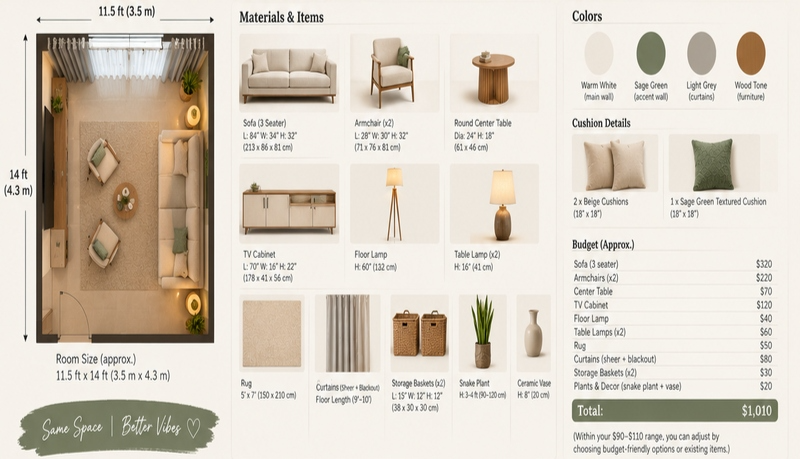
Suppose your living room is average-sized, looks a little dull, and has some clutter. First, make a plan: a budget of around 90–110 and one weekend for the work. Paint the walls soft warm white first (the main color). Create a light sage green accent wall on one side. Along with the ceiling light, add one floor lamp and two table lamps with warm white bulbs. Move the sofa 1.5 feet away from the wall, floating it, and place two chairs facing each other in front of it. Replace the previous large center table with a small wooden table. Place a medium-sized light beige rug on the floor, extending it slightly under the sofa. Add two closed wooden baskets for storage. Install floor-length sheer curtains with light grey blackout curtains. Use soft beige cushions and one with a sage green texture. Place a snake plant in the corner and a small ceramic vase on the shelf. Change the cabinet handles to matte black. The result: the room looks open, calm, and organized. No major renovation took place, but the enjoyment of sitting there every day increased. This practical example shows that small steps can also make a clear difference.
Follow a Budget-Friendly Order
First, fix repairs and safety issues. Then move on to lighting and paint. After that, focus on furniture arrangement and storage. Decor items come last. This sequence is best because you do not have to disturb finished surfaces repeatedly. If you plan to install smart devices such as a thermostat or smart lights, plan them before painting. After each project, pause for a while and see how the result looks. This way, you avoid unnecessary spending.
Avoid Common Mistakes
Do not ignore your lifestyle while following trends. Dark colors can feel heavy in small rooms. Avoid over-decorating – empty space is also part of design. Do not buy anything without taking measurements. And most importantly, put function before style. Anything that is not comfortable for daily use should not be kept just for show. All these tips come from experience. People have tried them in their homes; some things failed, while others were successful. The Decoratoradvice approach is practical – there is no need for expensive brands; a home can be improved through thoughtful changes.
Final Thoughts
Upgrading a home is a process, not a one-day job. Start with small steps. Complete one room, take motivation from the results, and then move to the next area. The real benefit of Decoradhouse upgrade tips by decoratoradvice is that these tips are realistic and can be applied to every budget. When a home becomes comfortable, organized, and visually calm, everyday life also feels better. Gradually shape your home according to your preferences. Keep the changes you like and continue adjusting the others. This approach proves to be the most successful in the long term.
For more information and suggestions, Contact Us.

Minha is a content writer associated with Auravaxis, where she creates informative and engaging digital content. She focuses on simple, budget-friendly changes that make everyday living more comfortable. Through LaunchDecorYard, she shares honest ideas that work in real homes rather than expensive or complicated designs.